If there’s one thing every sender in Australia relies on today, it’s parcel tracking. Whether you’re running an online store, sending important business documents, or posting something to a friend, tracking gives you peace of mind. It tells you where your parcel is, when it was last scanned, and when it should arrive.
But here’s the funny part — as much as people use tracking daily, very few actually understand how it works. Most assume it’s just a barcode and some updates. In reality, there’s a lot happening behind the scenes, and knowing a little more can help you avoid delays, reduce stress, and choose better courier options.
That’s why this parcel tracking guide breaks down everything: how scanning works, what each status really means, what causes tracking delays, and how to handle issues when they come up. And if you want expert support for professional-level tracking, Norwest Logistic Management helps every step of the way.
Let’s go deep — in a simple, human, practical way.
Why Parcel Tracking Matters So Much in Australia
Australia is huge, and parcels often travel thousands of kilometres between states. Without tracking, customers and businesses would be completely blind to the process.
Tracking matters because it:
- Reduces delivery uncertainty
- Shows proof of movement
- Helps businesses respond to customer inquiries
- Prevents lost parcels
- Identifies bottlenecks
- Ensures accountability
- Improves customer trust
In a country as large as Australia, tracking isn’t optional — it’s essential.
How Parcel Tracking Works (Simple Explanation)
Even though this is a complete parcel tracking guide, we’re going to explain everything in a clear, human way. No technical jargon.
Tracking starts when a barcode is created. After that, your parcel goes through a series of scans — each one marking its progress along the journey.
Here’s how it actually works.
1. The Barcode (Your Parcel’s Identity Tag)
Every parcel gets a unique barcode.
This barcode links to:
- Sender details
- Receiver details
- Courier network
- Parcel dimensions
- Parcel weight
- Tracking history
It’s the backbone of scanning and the entire tracking system.
2. First Scan: Lodgement or Pickup
Your parcel officially “enters the system” when the courier:
- Picks it up
- Scans it at the counter
- Receives it in a depot
This first scan activates tracking.
3. Sorting Hub Scans
This is where most of the magic happens.
In major hubs (Sydney, Melbourne, Brisbane, Perth), the parcel is:
- Scanned
- Weighed
- Sorted electrically
- Assigned to routing lanes
Sometimes parcels are scanned multiple times inside the same facility — you might see:
- “Sorting”
- “Processed”
- “In transit”
- “Moving through network”
These are all normal.
4. Linehaul Scans (Interstate Transport)
Linehaul simply means long-distance transport — trucks, flights, or both.
You may see:
- “Departed facility”
- “Arrived at facility”
- “Processed at airport”
- “Transferred to airline”
- “Loaded for transport”
This part determines the speed of your parcel.
5. Delivery Depot Scans
Once the parcel reaches the destination city, it enters the final depot.
Common statuses include:
- “In local depot”
- “Out for delivery soon”
- “Sorting at final facility”
This is where couriers plan last-mile routes.
6. Out for Delivery
This is the most exciting update for customers.
It means:
- A driver has the parcel
- It’s on a delivery run
- It should arrive that day
But… things can still go wrong (more on that later).
7. Delivered
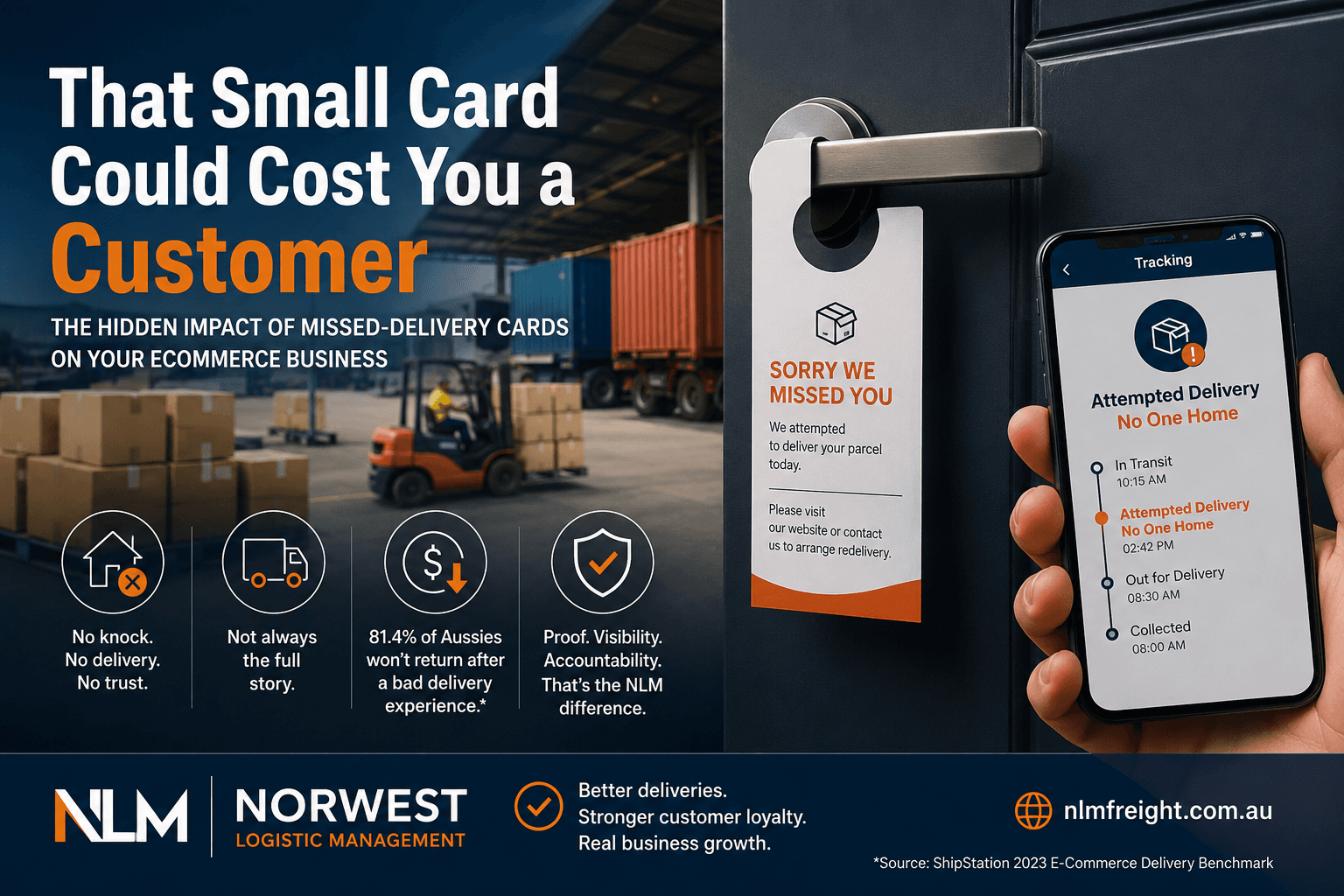
The final scan — proof of delivery.
Depending on the courier, this may include:
- Signature
- Photo
- GPS tag
- Delivery confirmation
- Authority to leave (ATL) note
Once this appears, the parcel is officially closed.
Types of Tracking Systems in Australia
Tracking isn’t the same for every courier. This parcel tracking guide explains the main systems.
1. Basic Tracking (Scan-to-Scan)
Used by:
- Australia Post Standard
- Aramex
- CouriersPlease
Updates appear only at major checkpoints.
2. Real-Time Tracking
Used by:
- Premium couriers
- Same-day delivery services
- Air-freight-based deliveries
Shows GPS location and live driver movement.
3. Hybrid Tracking
A mix of:
- Depot scans
- Live driver updates
- Automated notifications
This is what many businesses prefer today because it balances speed and cost.
4. Multi-Courier Tracking
When your parcel uses more than one courier (e.g., a hybrid route), tracking is merged into a single flow.
This is where Norwest Logistic Management helps — by unifying tracking data across networks.
Common Tracking Statuses Explained
This parcel tracking guide wouldn’t be complete without explaining what these common messages really mean.
“In Transit”
Your parcel is moving — either between facilities or while on the road.
“Processed at Facility”
The parcel reached a depot and was scanned into the system.
“With Driver for Delivery” / “Out for Delivery”
The courier has your parcel and will attempt delivery today.
“Delayed”
Something caused a slowdown:
- Weather
- Traffic
- Flight delay
- Mis-sort
- Overload
- Driver shortage
“Could Not Be Delivered”
Usually means:
- No one was home
- Address was unclear
- Access issue (gated property)
- Unsafe to leave parcel
“Awaiting Collection”
Parcel moved to a pickup point or local post office.
“Delivered”
Final scan — parcel successfully arrived.
Why Tracking Sometimes Shows No Updates
Few things stress senders more than no tracking movement.
Here are reasons your parcel might “freeze” in the system:
- Missed scan
- Busy sorting hub
- Flight delays
- Weekend or public holiday
- Network congestion
- Parcel at a facility with slower scanners
- Courier backlog
- Parcel was misrouted
- Data update delay (common with budget couriers)
If tracking doesn’t update within 48 hours for metro deliveries, raise a support query — or, better yet, ask your logistics partner to investigate.
What Causes Tracking Delays Across Australian Cities
Some cities move parcels faster than others. Here’s the breakdown.
Sydney
Challenges:
- Traffic
- CBD access restrictions
- High delivery volume
Strengths:
- Strong courier presence
- Good express lanes
Melbourne
Challenges:
- Peak-hour bottlenecks
- Large suburban spread
Strengths:
- Excellent sorting hub efficiency
Brisbane
Challenges:
- Outer suburbs often slower
Strengths:
- Stable metro delivery performance
Perth
Challenges:
- Long interstate flights
- Limited overnight air routes
Strengths:
- Fast intra-city delivery
Adelaide
Challenges:
- Limited flight options
Strengths:
- Smooth sorting and low congestion
How Businesses Can Improve Delivery Transparency
Businesses often overlook simple things that make tracking more accurate.
Here’s what to do:
- Send parcels earlier in the day
- Always enable signature or tracking notifications
- Use clean, scannable barcodes
- Avoid oversized packaging
- Share tracking links with customers
- Choose couriers with strong metro coverage
And the biggest tip:
👉 Work with a logistics partner that manages tracking on your behalf.
How Norwest Logistic Management Improves Parcel Tracking
At Norwest Logistic Management, we simplify everything by:
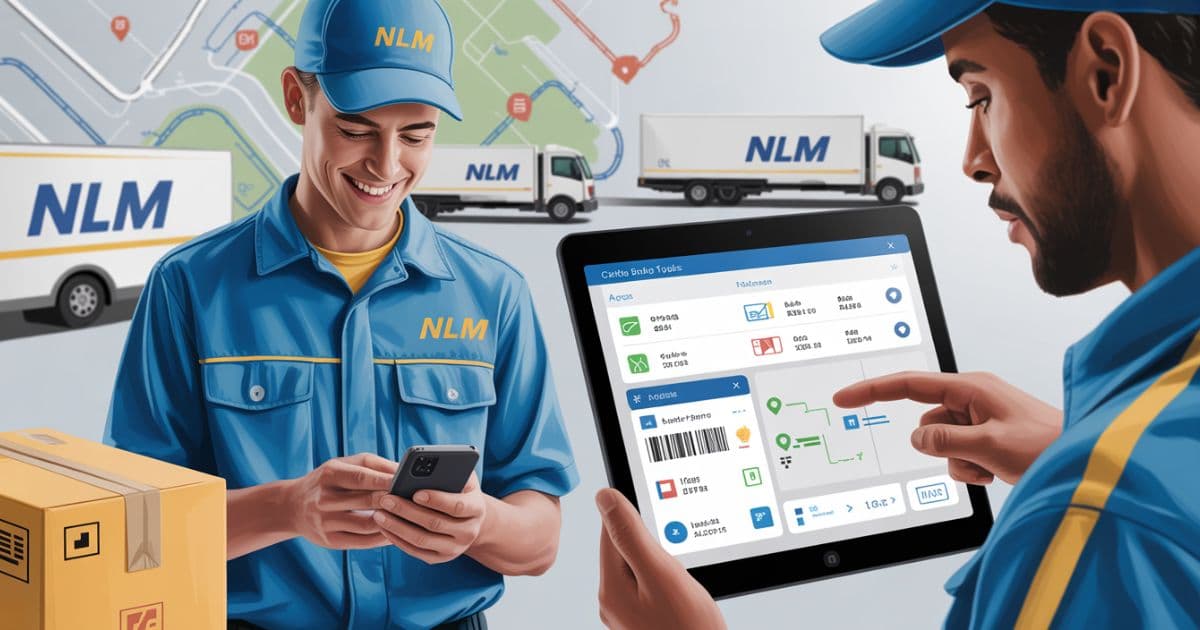
- Combining multi-courier tracking into one system
- Ensuring faster, more reliable updates
- Selecting couriers with strong scanning performance
- Offering proactive investigation when tracking stalls
- Giving businesses real-time visibility
- Reducing missed deliveries
- Improving customer communication
Better tracking = fewer customer complaints = smoother operations.
Key Takeaways
- A parcel tracking guide helps senders understand how tracking works from barcode to delivery.
- Tracking depends on scanning accuracy, routing, flight schedules, and last-mile delivery.
- Some statuses can look confusing but are completely normal.
- Delays often happen due to city infrastructure, traffic, weather, or cut-off times.
- Businesses can improve tracking reliability through better packaging, timing, and logistics planning.
- Working with Norwest Logistic Management improves tracking accuracy and reduces delivery issues.
Conclusion
Parcel tracking may seem simple on the surface, but it’s supported by a very complex logistics network — scanners, routing hubs, data syncing, flight schedules, and last-mile operations all working together.
Understanding how tracking works helps you avoid frustration, interpret updates properly, and make smarter decisions when sending parcels.
And if you want tracking that’s reliable, fast, and professionally managed…
👉 Choose Norwest Logistic Management — your partner for accurate tracking and efficient parcel deliveries.