For many small businesses, freight is one of those costs that quietly grows in the background. At first, it feels manageable. A few shipments here, a pallet there. But as orders increase and customers spread across cities, freight expenses can start eating into margins faster than expected.
That’s where affordable freight options become critical — not just to save money, but to stay competitive.
Sydney, Melbourne, and Brisbane are Australia’s three biggest commercial hubs, yet each city comes with its own freight challenges. Traffic congestion, long suburban distances, different courier strengths, and rising fuel costs all influence how freight moves and how much it costs.
This guide breaks down the most practical and cost-effective freight options for small businesses operating across these three cities, what to consider before choosing a provider, and how working with Norwest Logistic Management helps businesses balance cost, speed, and reliability.
Why Freight Costs Hit Small Businesses Harder
Large corporations absorb freight costs across massive volumes. Small businesses don’t have that luxury. Every shipment matters.
Here’s why freight can quickly become a pain point for SMEs:
- Limited negotiating power with carriers
- Fluctuating fuel surcharges
- Paying retail freight rates
- Overusing express freight unnecessarily
- Sending partial loads instead of consolidating
- Choosing the wrong freight mode for the job
- Lack of visibility across shipments
Finding affordable freight options isn’t about choosing the cheapest service every time — it’s about choosing the right service for each shipment.
Understanding Freight vs Courier Services
Before diving deeper, it helps to clarify the difference.
- Courier services → Small parcels, documents, same-day or next-day delivery
- Freight services → Pallets, cartons, bulk goods, interstate transport
Many small businesses accidentally use courier services for freight-sized shipments, which increases costs dramatically. Freight solutions are often cheaper when volume increases — if used correctly.
Common Freight Challenges in Australia’s Major Cities
Each city has its own freight personality. Understanding this helps businesses choose better routes and providers.
Sydney: High Volume, Heavy Congestion
Sydney is Australia’s busiest freight market, but also the most complex.
Challenges include:
- Traffic congestion
- Toll roads
- Limited loading zones
- High demand during peak hours
Best approach:
- Off-peak freight movement
- Consolidated loads
- Strategic depot placement
- Route-optimised carriers
Sydney rewards planning more than speed alone.
Melbourne: Wide Spread, Long Distances
Melbourne’s suburbs stretch far and wide.
Challenges include:
- Long last-mile distances
- Variable traffic patterns
- Weather disruptions
Best approach:
- Hub-and-spoke freight models
- Localised distribution points
- Scheduled linehaul services
Melbourne freight is often reliable — but needs structure.
Brisbane: Efficient but Expanding
Brisbane generally offers smoother freight movement.
Challenges include:
- Rapid urban expansion
- Outer-suburb delivery delays
- Limited late-night freight windows
Best approach:
- Flexible scheduling
- Consolidation
- Metro-optimised carriers
Brisbane works well for small businesses with growing regional reach.
Most Affordable Freight Options for Small Businesses
Let’s look at the freight methods that typically offer the best value across Sydney, Melbourne, and Brisbane.
1. Road Freight (The Most Common Choice)
Road freight is the backbone of Australian logistics.
Why It’s Affordable
- Flexible scheduling
- Competitive pricing
- Ideal for palletised goods
- Suitable for metro and interstate
Best Use Cases
- Pallets
- Carton freight
- B2B deliveries
- Regular business shipments
For many SMEs, road freight is the most practical and affordable option — especially when routes are optimised.
2. Consolidated Freight (Shared Loads)
Consolidation means sharing space with other shipments.
Why It Saves Money
- You pay only for the space you use
- Lower per-unit transport costs
- Reduced empty truck space
Trade-Off
- Slightly longer delivery windows
- Requires good scheduling
Consolidated freight is one of the most effective affordable freight options for small businesses shipping regularly.
3. Palletised Freight
When shipments are consistent in size, palletisation improves efficiency.
Benefits
- Faster loading/unloading
- Reduced handling damage
- Predictable pricing
- Better space utilisation
Pallet freight is ideal for wholesale, retail, and manufacturing businesses.
4. Rail Freight (For Interstate Volume)
Rail freight is often overlooked by SMEs.
When It Makes Sense
- Long-distance interstate shipments
- Heavy or bulky goods
- Flexible delivery timelines
Why It’s Affordable
- Lower fuel cost per unit
- Environmentally efficient
- Stable pricing
Rail is slower than road but often cheaper for large volumes.
5. Hybrid Freight Solutions
Hybrid freight combines:
- Road + rail
- Road + courier
- Freight + last-mile courier
This approach balances cost and speed, especially for city-to-city movement with local delivery at the end.
This is a strategy frequently used by Norwest Logistic Management to create cost-effective freight routes.
What Makes Freight “Affordable” (Beyond Price)
True affordability isn’t just about the lowest quote.
It includes:
- Reliable delivery times
- Minimal damage or loss
- Fewer failed deliveries
- Reduced admin time
- Consistent pricing
- Clear tracking
- Good customer support
Cheap freight that causes delays or losses becomes expensive very quickly.
Common Mistakes Small Businesses Make with Freight
Avoiding these mistakes can significantly reduce costs:
- Sending freight as courier parcels
- Choosing express freight unnecessarily
- Not consolidating shipments
- Ignoring suburb-specific carrier strengths
- Over-packaging goods
- Not reviewing freight invoices
- Switching providers too frequently
- Not planning dispatch schedules
Most of these issues disappear with structured freight planning.
How Norwest Logistic Management Helps Reduce Freight Costs
At Norwest Logistic Management, we help small businesses access affordable freight options without sacrificing reliability.
Here’s how we do it:
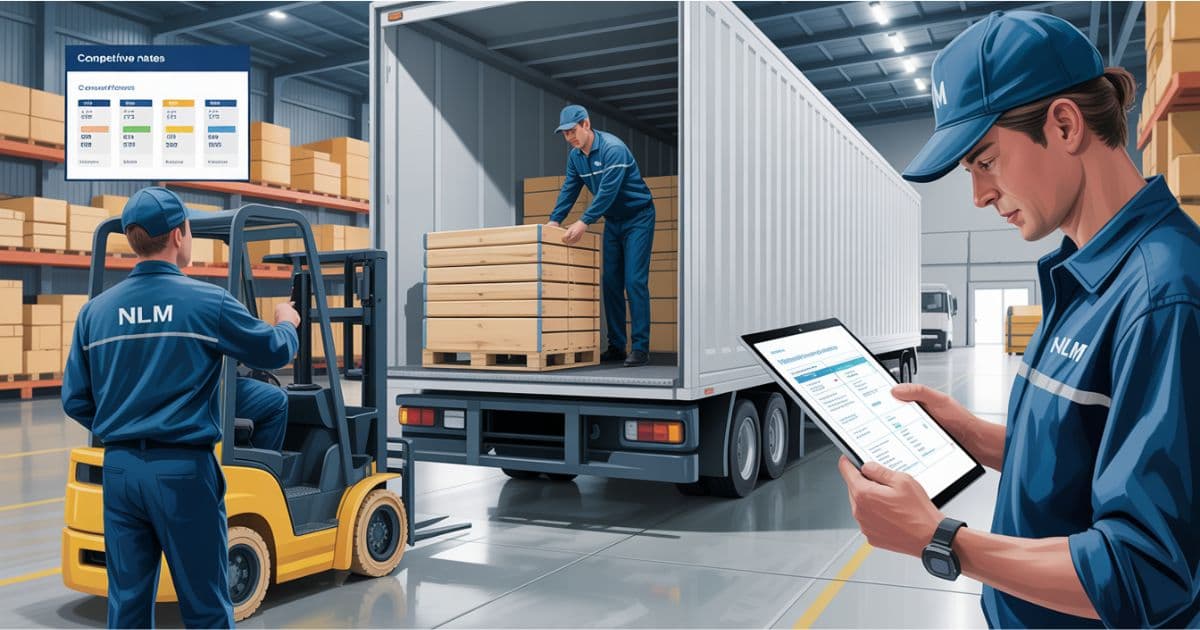
✔ Multi-Carrier Freight Access
We compare multiple freight providers to find the best option for each route.
✔ Smart Route Planning
We choose freight modes based on distance, urgency, and volume.
✔ Consolidation & Load Optimisation
Reducing wasted space lowers costs.
✔ City-Specific Expertise
Sydney, Melbourne, and Brisbane each require different freight strategies — we tailor accordingly.
✔ Transparent Pricing
No hidden charges, no surprises.
✔ Centralised Tracking
Full visibility across all shipments.
✔ Scalable Freight Solutions
As your business grows, your freight solution grows with it.
Which Businesses Benefit Most from Affordable Freight Options?
These solutions are especially valuable for:
- Wholesalers
- Retailers
- eCommerce businesses
- Manufacturers
- Importers & distributors
- Construction suppliers
- Food & beverage businesses
- Growing startups
If freight is part of your daily operations, cost control matters.
How Small Businesses Can Start Saving on Freight Today
You don’t need a full overhaul to see savings.
Start with:
- Reviewing current freight spend
- Consolidating shipments
- Using pallet freight where possible
- Planning dispatch days
- Choosing road freight over express courier
- Working with a freight specialist
Small changes add up quickly.
Key Takeaways
- Affordable freight options help small businesses control costs without hurting delivery performance.
- Sydney, Melbourne, and Brisbane each require different freight strategies.
- Road and consolidated freight offer the best balance of cost and flexibility.
- Palletisation improves efficiency and reduces handling issues.
- Rail freight can be cost-effective for long-distance bulk shipments.
- Hybrid freight models often deliver the best results.
- Working with Norwest Logistic Management gives small businesses access to optimised, cost-effective freight solutions.
Conclusion
Freight doesn’t have to be a financial burden for small businesses. With the right planning, the right freight mode, and the right logistics partner, shipping costs become predictable, manageable, and scalable.
Sydney, Melbourne, and Brisbane each present unique challenges — but they also offer strong freight networks when used correctly.
If you’re looking for affordable freight options that actually work for your business,
👉 partner with Norwest Logistic Management and take control of your freight costs with confidence.